
Earlier this year, the Union Cabinet gave the management of state-run companies the freedom to decide on divesting their subsidiaries. However, the very next day a meeting was held at the top level of the Government of India, for the presentation of proposals for more autonomy for state-run companies. Interestingly, no chiefs of any of these companies were invited. It is a problem that will stare the government in the face with the state-owned banks too, as talks have again begun for inviting strategic investments in these companies.

The government has merged the Department of Public Enterprises (DPE) with the finance ministry to give it a better control over state-owned firms and facilitate its ambitious privatisation programme. Finance ministry will now have six departments while DPE's hereto parent ministry, the ministry of heavy industries and public enterprises will now be called the ministry of heavy industries. Previously, the disinvestment ministry - created under the Atal Bihari Vajpayee government - was merged with the finance ministry and is now a department under it. Also, Foreign Investment Promotion Board (FIPB) was abolished and administration of foreign investments was given to the finance ministry (FinMin).
Lack of decisiveness and courage to deal with PSBs may turn out be the biggest impediment to the Modi government's economic initiatives, says Debashis Basu.


The Centre may overshoot the Rs 56,260 crore target for dividend receipts from central public-sector enterprises (CPSEs) set for FY25 and is likely to end up getting around Rs 65,000 crore this financial year, according to a senior government official. This excludes dividend from nationalised banks and financial institutions. As on October 21, the Centre collected Rs 28,913 crore as dividend and other investment from CPSEs, accounting for over 50 per cent of the Budget Estimate for FY25.
Finance Minister P Chidambaram on Thursday made a double pitch for public sector companies. First he urged private sector companies to enter into joint venture partnership with PSUs

Khara will replace SBI Chairman Rajnish Kumar, whose three-year term comes to an end on October 7.

The Centre is looking to continue maintaining an arms length in financial sector appointments.

The government is set to carry out a performance review of companies that have opted for corporate debt restructuring (CDR).

Wrapped in blue and orange wax paper, it's a familiar sight on the shelves of kirana stores across the country. Given how well travelled and mobile it is - starting its journey in Chennai, then turning to Singapore and now landing in Mexico - you could say it lives up to its name: Modern. Modern Food Enterprises, the company that manufactures and sells the bread in question as well as other bakery products under the "Modern" brand name, has recently been sold to the world's largest baking company, Grupo Bimbo, for an undisclosed amount. This latest transaction is the second change of guard at Modern within five years and third since the government divested the company at the turn of the century. At a time, when the National Democratic Alliance government has decided to privatise, or shut down, public sector enterprises except for those deemed strategic, Modern makes for a promising case study of how divestment led to the brand's growth, both in revenue and reach.
'We are going to need more technical people in government.' 'You can't expect a generalist to understand the complicated world of financial engineering.' 'I regret to say that most of our politicians have no competence to deal with these things. Nor is there a willingness to learn.'

If the concerns over risking political capital are overcome, the long-term gains for the Indian economy will be immense, asserts A K Bhattacharya.

Manufacture will soon be stopped at Bangalore and Tumkur in Karnataka and Ranibagh in Uttarakhand.

'I think some of us, like Mukesh Ambani, myself and those of us who head industrial units, ought to really focus on what we can really do to make the world a safer place, maybe 50 or 100 years from now.' 'For instance, how can we deal with climate change and global warming, right now?' 'The effects of it may not be felt now; in fact, we may pay a price for it today, but it will help the generations to follow.'

For banks, the package will limit the burden of provisioning for stressed loans. Besides, the proposed restructuring package for MSMEs with a credit of up to Rs 25 crore is expected to provide a breather to units from this sector.

Kumar said the Commission will follow the time-tested methods of consultations and consensus building in bringing about any reforms and will not shy away from tough decisions, according to an Election Commission (EC) statement.

Investors with stalled projects and mounting bad debt will refinance their loans.
Even if Mudra steps in to play its main role of refinancing at some stage, the responsibility for the bad loans remains with the banks.

The meeting will be attended by all heads and EDs of public sector banks

Indian bankers are fearful that going out of their way to save Jet could lead to subsequent harassment from investigative agencies.

In a recent lecture, RBI governor Raghuram Rajan dished out some frank advice -- don't get into 'jugaad', instead try for the long haul. Only that will sustain in the long-run.

Money is being released and the government knows it will have to front-run private investment.

'No Budget has so far has addressed the issue of the government's abysmal productivity of capital spending, improving which will be the big game changer. 'But, the government's tight lock on businesses, banks, education, and even essential services like transportation and large parts of infrastructure and healthcare is destroying capital year after year,' points out Debashis Basu.
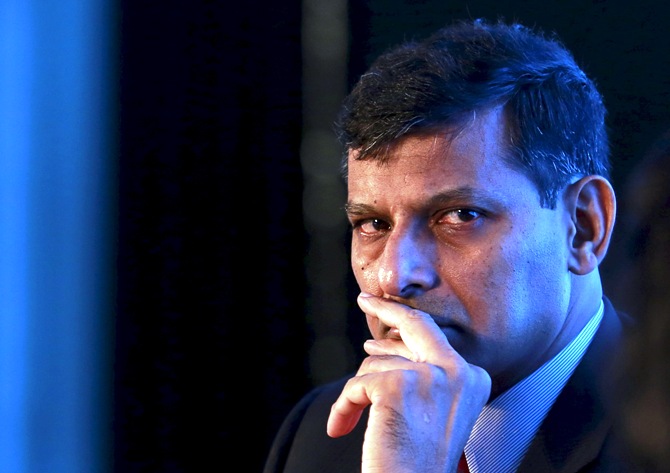
We need a change in mindset, says the RBI Governor.
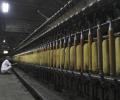
British India Corporation employs about 1,800 people

Tamal Bandyopadhyay discusses his latest book Bandhan: The Making of a Bank at Bandhan headquarters in Kolkata.

A glance back at some important events that occurred in 2018.
